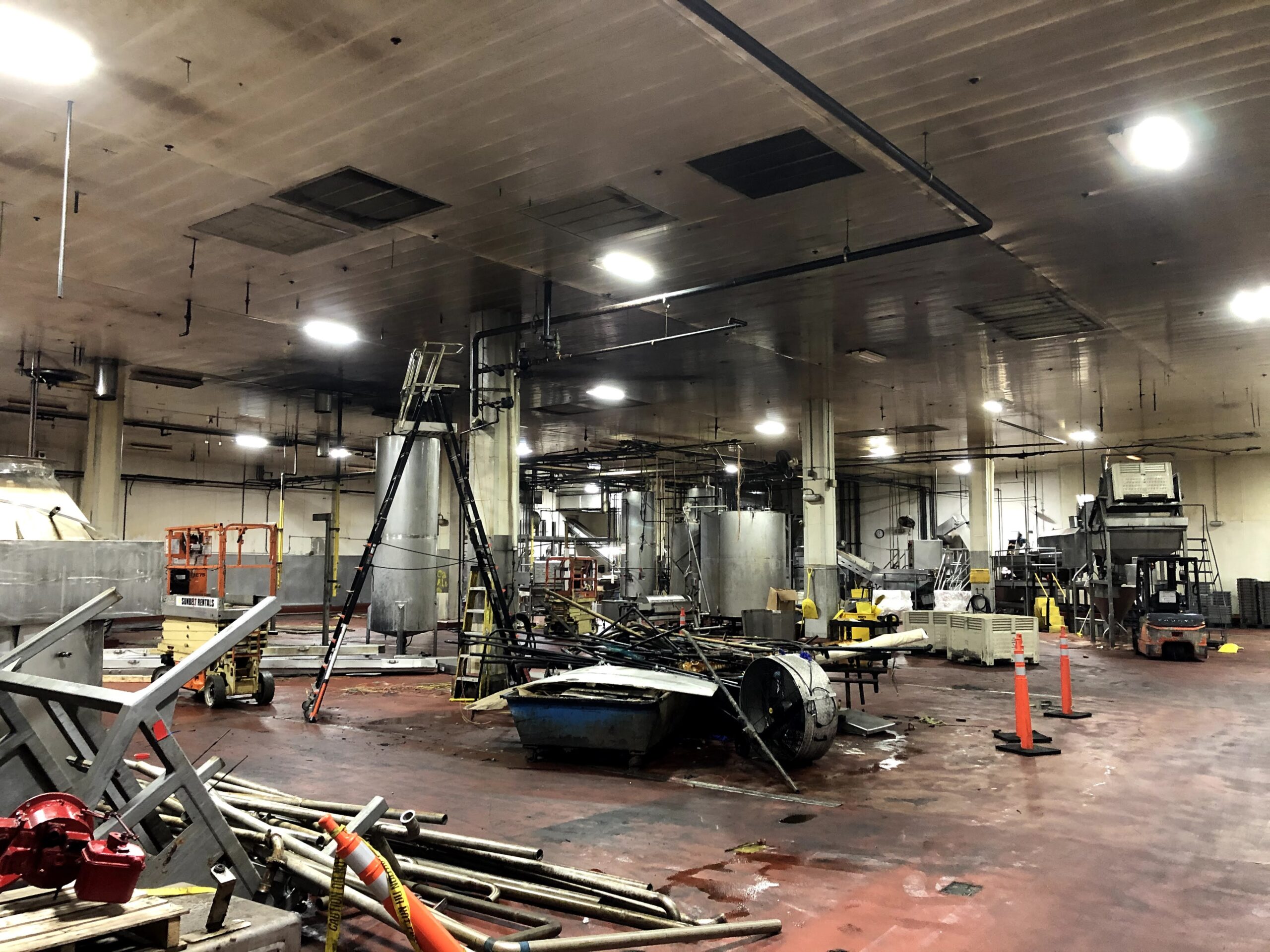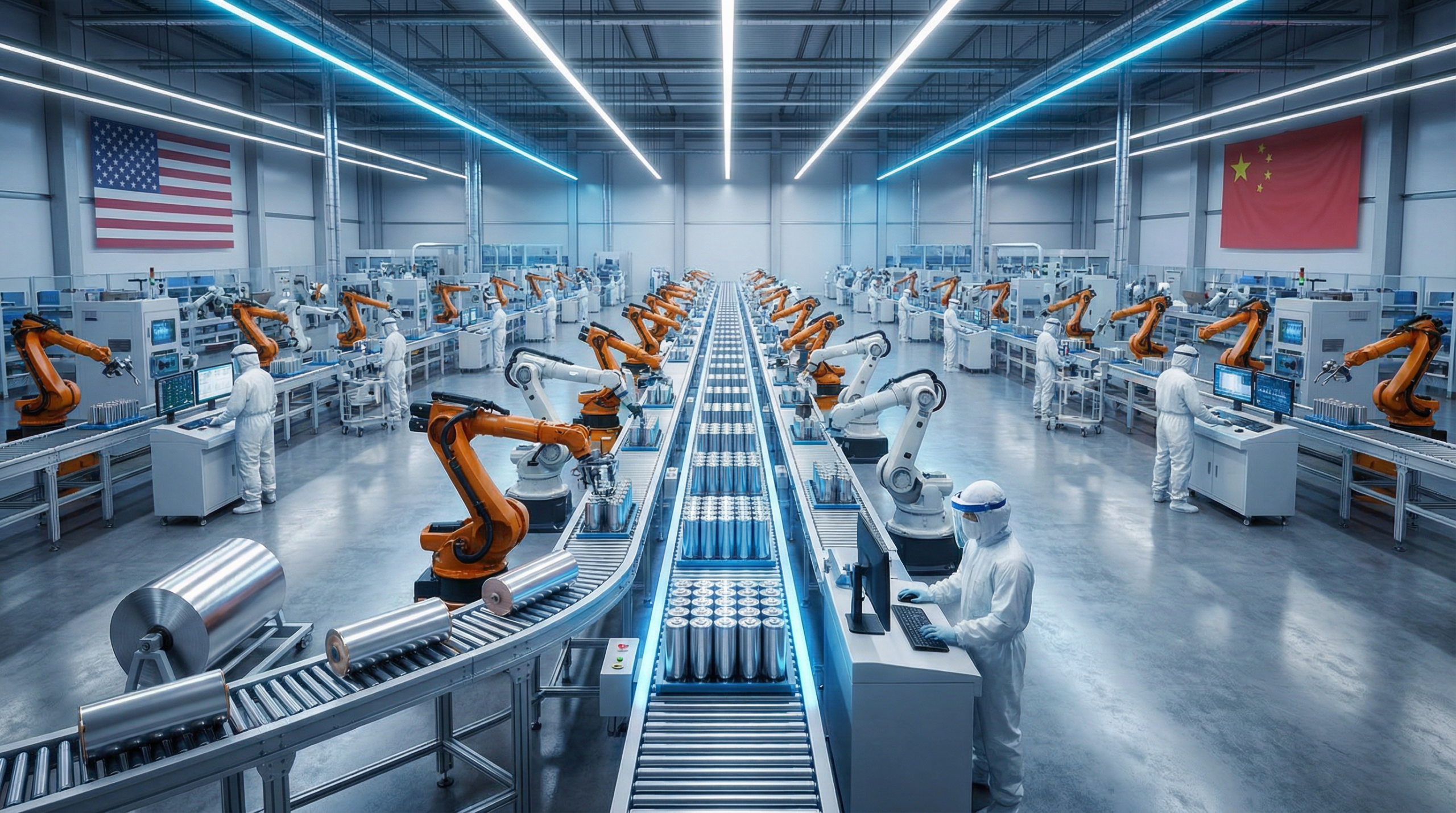
We were promised that tariffs would bring manufacturing jobs flooding back to American soil. Factory floors would revitalize their operations and supply chains would return to normal. The dream of the United States reclaiming its position as the global manufacturing powerhouse was nearing reality. Or so we thought. One year into the Trump administration’s second term, the outcomes are nowhere near idyllic.
Manufacturing employment has declined since the tariff policies took effect in spring 2025. Total manufacturing employment now sits at its lowest level since March 2022. Not to mention, the trade deficit in manufactured goods has considerably increased. In a globalized economy, rebuilding domestic manufacturing capacity requires a more nuanced approach than simply slapping tariffs on goods. It demands a comprehensive transformation of workforce development, capital investment, and industrial strategy.
In this article, I will discuss the broader issues surrounding domestic manufacturing, how successful onshoring efforts have been, and highlight five key strategies to make meaningful impact in strengthening American manufacturing.
How Tariff Policies Have Impacted Domestic Production
What are tariffs? Simply put, tariffs are taxes on imported goods. This tax makes foreign products more expensive. The Trump administration has been imposing tariffs on several countries, starting with China. Canada, Mexico, and European Union countries soon followed. The tariffs imposed on steel and aluminum imports in March 2025 doubled by summer.
The economic theory supporting tariffs states that they should insulate domestic industries and create jobs. While earlier steel and aluminum tariffs during Trump’s first term did produce a small increase in American metal production, the Federal Reserve found they in fact reduced overall manufacturing employment. The negative downstream effects on industries requiring these components, such as automotive manufacturing, outweighed the gains for domestic steel and aluminum producers.
As was expected, the broader tariffs implemented in 2025 have resulted in higher prices and increased inflation for the American people. On top of that, manufacturing employment is lower than it was in Trump’s first term and production capacity at manufacturing facilities has dropped to historic lows.
Why Domestic Production Struggles to Compete
The challenges facing U.S. manufacturing extend far beyond trade policy. They are rooted in fundamental structural disadvantages that have accumulated over decades of offshoring.
The Labor Cost Chasm
American manufacturers face a labor cost disadvantage that automation alone cannot yet solve. Not to mention, automation still requires labor (unless the facility is a dark warehouse). Fully loaded U.S. manufacturing wages—that includes wages, benefits, and social security—range substantially higher than competing nations at $21 – $38 per hour. By comparison, Mexico’s average manufacturing wage sits at $4.50 per hour and China’s rates are $6.50 per hour.
This wage differential directly creates competitive pressure, especially when manufacturers are running extremely labor-intensive operations with minimal automation and inefficient throughput rates.
The Skilled Labor Crisis
But is labor cost the most important issue or is finding the right kind of labor the issue? Labor has always been a major cost driver, but costs of goods have been rising to accommodate for that. In fact, productivity has grown 2.7 times faster than pay since 1979. This means that workers produce more per hour worked than they previously did, and this is backed by labor unit costs only rising 1.27% year over year, which is slower than inflation.
Another less-discussed phenomenon is the lack of skilled labor in the market. According to joint research by Deloitte and The Manufacturing Institute, millions of manufacturing jobs could go unfilled by 2030 due to the skills gap, potentially costing the U.S. economy over $1 trillion in that year alone. Recent surveys found that nearly 80% of manufacturing executives identify skilled labor shortage as their biggest obstacle.
The roots of this crisis trace back decades. As manufacturing jobs moved overseas, trade school enrollment stagnated and then declined. From 2017 to 2020, skilled trade schools saw enrollment declining at over 4% per year. Vocational education fell out of favor as college degrees became the cultural standard, leaving a generation without the hands-on training manufacturing requires.
Although enrollment numbers have begun growing and projections suggest continued growth through 2030, this recovery comes decades too late. Even if reshoring efforts do bring production back, the workforce shortage is far too large to overcome in a short period of time.

The Infrastructure Gap
U.S. manufacturers also deal with infrastructure challenges that overseas competitors have already addressed. Construction spending in manufacturing has declined substantially year-over-year. Most manufacturing infrastructure continues to age with no comparable government assistance.
The infrastructure challenge is not unique to manufacturing, though. The American approach to capital projects is systematically dysfunctional. The infrastructure deficit affects every sector, with permitting processes, bureaucratic coordination, and environmental reviews creating delays that compound costs and kill momentum.
Federal permitting for major infrastructure projects takes an average of 4.5 years, with roads and bridges averaging 7.4 years. Construction costs balloon to 30% over project timelines due to material inflation, labor costs, and administrative overhead.
America’s high-speed rail hopes and dreams highlight this dysfunction. California approved its San Francisco-to-Los Angeles high-speed rail line in 2008 and has since spent billions without completing a single operational segment, while China has built over 45,000 kilometers of operational high-speed rail. This gap stems not from technical incapacity but from institutional inefficiency including overlapping jurisdictions, environmental litigation risks, NIMBY opposition, and multiple approval authorities that force projects into sequential rather than concurrent review.
Another example is subway station construction in New York, which costs six times more than comparable stations in Paris. This cost is driven by overbuilding, regulatory defensiveness, and institutional turf battles rather than engineering requirements. This disjointed approach directly impacts manufacturing competitiveness. A manufacturer cannot build a $500 million facility if the permitting process consumes 4.5 years and adds $100 million in carrying costs.
The solution requires not lowering environmental or safety standards, but fundamentally restructuring how America processes approvals, coordinates agencies, and manages timelines. Until the nation addresses this systemic inefficiency in capital project delivery, manufacturing will remain behind other countries leading the charge—regardless of tariff policy or incentive structure.
How Investment Capital Bypasses Manufacturing

The flow of venture capital reveals how American innovation culture has deviated from its manufacturing roots. In 2024, $127B in funding went into software, which is 5x more than robotics. Hardware requires more capital and takes longer to monetize. Knowing this, it’s understandable why software has taken a lead role in VC funding.
Modern American business culture idolizes founders whose genius lay in design and market creation, with manufacturing famously outsourced to partners. The messy, capital-intensive work of successfully scaling a factory doesn’t gain the same universal prestige. These perceptions matter—they shape where talented graduates choose to work and where investors spend capital.
Some argue that America should focus on its competitive advantages in intellectual property and services, leaving manufacturing to others. This perspective ignores the critical reality that manufacturing economies provide stability and resilience that service economies lack. The COVID-19 pandemic exposed how supply chain disruptions cascade through entire economies when production capacity resides overseas.
Manufacturing contributes approximately $2.4 trillion to the U.S. economy, representing about 10% of GDP. By comparison, China maintains manufacturing at 28% of GDP, Japan at 20%, and Germany at 18%. These nations demonstrate that advanced economies can sustain robust manufacturing sectors while competing in innovation and services.
Reshoring: Early Wins and Persistent Obstacles
Despite the challenges, reshoring has gained some momentum, driven by a combination of geopolitical awareness, government incentives, and technological advancement.
Success Stories and Investment Commitments
Several high-profile commitments demonstrate that reshoring can work at scale. Taiwan Semiconductor Manufacturing Company has committed over $165 billion in total U.S. investment, focused on Arizona chip production facilities. The complex received substantial CHIPS Act funding and began high-volume production at its first Arizona facility in late 2024. Apple has announced plans to invest more than half a trillion dollars in domestic manufacturing over the coming years.
A comprehensive reshoring survey found that nearly half of contract manufacturers have reshored production for customers or are actively in process of reshoring. Quality concerns, delivery time, and supply chain disruption risk emerged as the primary drivers.
State and Federal Incentives Driving the Shift
Government policy has proven essential to making reshoring economically viable. The CHIPS and Science Act allocated over $50 billion to semiconductor manufacturing, including nearly $40 billion specifically for fabrication facility construction. Major awards have gone to Intel, Samsung, TSMC, and GlobalFoundries, enabling projects that would struggle to achieve financial viability without public support.
The Inflation Reduction Act dedicated $369 billion over a decade to incentivize domestic investment in clean energy and related manufacturing. These investments have catalyzed downstream manufacturing of solar panels, wind turbines, electric vehicle components, and battery technology.
State-level programs provide additional tax credits, workforce training, and infrastructure support. The competition among states to attract manufacturing investment has intensified, creating opportunities for manufacturers to negotiate favorable terms.
The Automation Imperative
Technology provides the most promising path to bridging the labor cost gap. Three-quarters of manufacturers report investing in AI and automation technologies, though investment doesn’t necessarily translate to successful implementation or scaled adoption. Many pilot projects stall due to cybersecurity concerns, cost constraints, and workforce capability gaps. Full-scale deployment remains limited, with most manufacturers still in early experimentation phases.
AI-driven robotics, machine vision systems for quality control, and digital twin technology for process optimization enable manufacturers to produce more with fewer workers while maintaining precision that manual processes cannot match. These technologies don’t simply replace workers; they multiply the productivity of the workers who remain.
However, the workforce also requires upskilling to deploy and manage AI-related manufacturing technology. All of this requires thoughtful planning and execution to increase the likelihood of success, and to prevent failure and abandonment of technology adoption. The factory worker of 2030 looks less like a traditional assembly line operator and more like a technician monitoring and troubleshooting intelligent systems, and manufacturers need to embrace that.
Building a Sustainable Manufacturing Future
Reversing decades of manufacturing decline requires coordinated action across multiple dimensions.
Workforce Development Through Public-Private Partnerships
Federal programs like Manufacturing USA and the Manufacturing Extension Partnership connect manufacturers with workforce training resources through public-private partnerships across all 50 states.
These programs demonstrate that effective workforce development requires collaboration between government, industry, and educational institutions. Manufacturers must engage with local community colleges to develop curricula aligned with industry needs, offer apprenticeship programs that combine classroom learning with paid work experience, and commit to retention strategies that make manufacturing careers attractive to younger generations. Simply posting job openings and hoping qualified applicants appear is not going to cut it.
Confronting Geopolitical Realities
The imperative for domestic manufacturing extends beyond economics into national security. Taiwan produces 60% of global semiconductors and more than 90% of advanced chips. Geopolitical analysts assess that tensions in the Taiwan Strait pose the most significant near-term risk to global semiconductor supply chains. Such a disruption could reduce global economic output by nearly 3%, with estimated losses for electronics manufacturers reaching hundreds of billions of dollars.
Over-reliance on any single region for critical materials and components creates systemic vulnerabilities that tariffs alone cannot address. Diversification requires intentional strategy which includes identifying critical supply chain dependencies, developing alternative suppliers in allied nations, investing in domestic capacity for strategic materials, and maintaining buffer inventories despite the costs.
The Path Forward
One year into renewed tariff policies, it is evident that tariffs alone will not resurrect American manufacturing. The path forward requires integrated strategy across five dimensions:
1. Workforce Development Must Become a National Priority
The millions of projected unfilled manufacturing positions by 2030 represent the binding constraint on reshoring. Expanding trade school capacity, creating clear career pathways, partnering with manufacturers to develop relevant curricula, and elevating skilled trades in cultural messaging will determine whether reshoring ambitions can be realized.
2. Government Incentives Must Be Sustained and Expanded
The CHIPS Act and Inflation Reduction Act have proven effective at catalyzing major investments. These programs require consistent funding across election cycles to provide the certainty manufacturers need.
3. Manufacturers Need Accessible Pathways to AI Adoption, Not Just More AI Development
Only 51.6% of manufacturers have an AI strategy, and implementation costs run three to five times subscription prices. Pilot projects stall due to capital constraints and technical expertise gaps. Solutions include manufacturing-specific implementation grants, public-private partnerships with technical assistance, and workforce training.
4. Policies Must Be Implemented to Accelerate Infrastructure Upgrades Without Bypassing Critical Regulations
U.S. manufacturers confront aging infrastructure while competitors modernize. Reforming how projects are approved and coordinated is essential if manufacturers are to build modern facilities on competitive timelines.
5. The U.S. Must Diversify What it Manufactures and Reduce Overreliance on Foreign Production
Concentrating critical supply chains in a handful of countries exposes American industry to geopolitical shocks, trade disputes, and regional instability. Building broader domestic capacity in strategic sectors, while also cultivating resilient supply relationships with trusted allies, is essential to ensure that a single regional crisis cannot paralyze production, threaten national security, or undermine long‑term economic stability.
The question isn’t whether America can manufacture competitively—the success stories at TSMC, Intel, and dozens of smaller reshoring projects prove it’s possible. The question is whether the nation will make the sustained, comprehensive investments in workforce development, infrastructure, technology, and policy stability that success requires. Tariffs may serve as one tool in a broader strategy, but they cannot substitute for the fundamental rebuilding that decades of offshoring made necessary. The work ahead demands patience, substantial investment, and a clear-eyed assessment of what drives manufacturing competitiveness in the modern global economy.