When Factory Transformation Works
Most manufacturing transformation projects fail not because the vision is wrong, but because the team never agrees on what success looks like. We’ve been a part of some high-functioning environments, but most of what we see needs support and redirection.
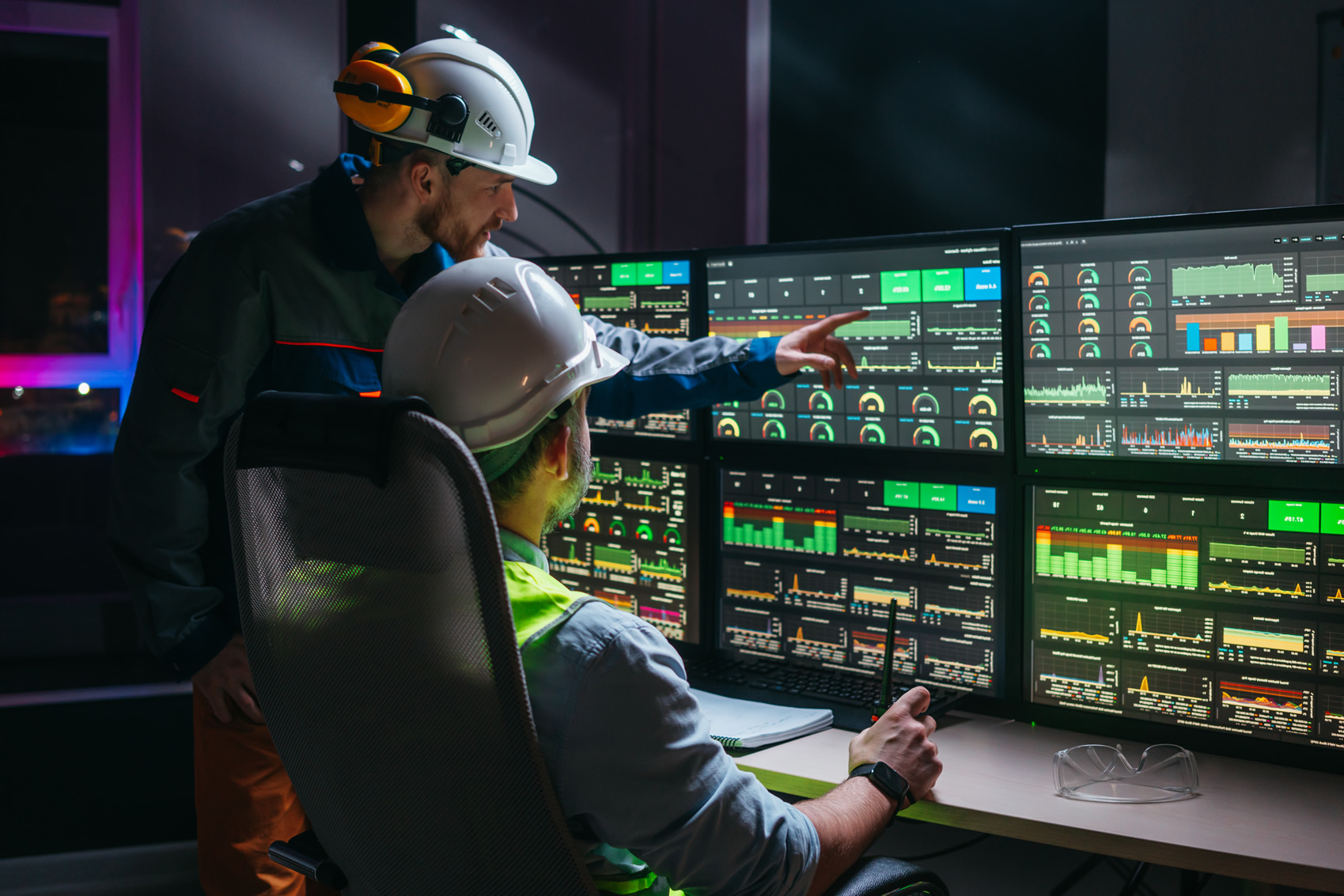
We see operations leaders thinking about throughput. Engineers are thinking about equipment specs and robots everywhere. Finance thinking about payback periods, cringing at the sound of ideation. Supply chain is thinking about procurement windows and the long road to price pack architecture and redesigns. Everyone is jockeying for space, and nobody is speaking the same language about what needs to happen and why. Manufacturing environments foster interdepartmental friction. This is the natural evolution of checks and balances. This ensures product safety, quality, and operational efficiency are all achieved. But when it comes to transformation or modernization projects, it creates tension in the room. If not managed carefully, it could also yield months of rework, budget overruns, and in many cases systems or factories that technically works but don’t deliver the desired business outcome.
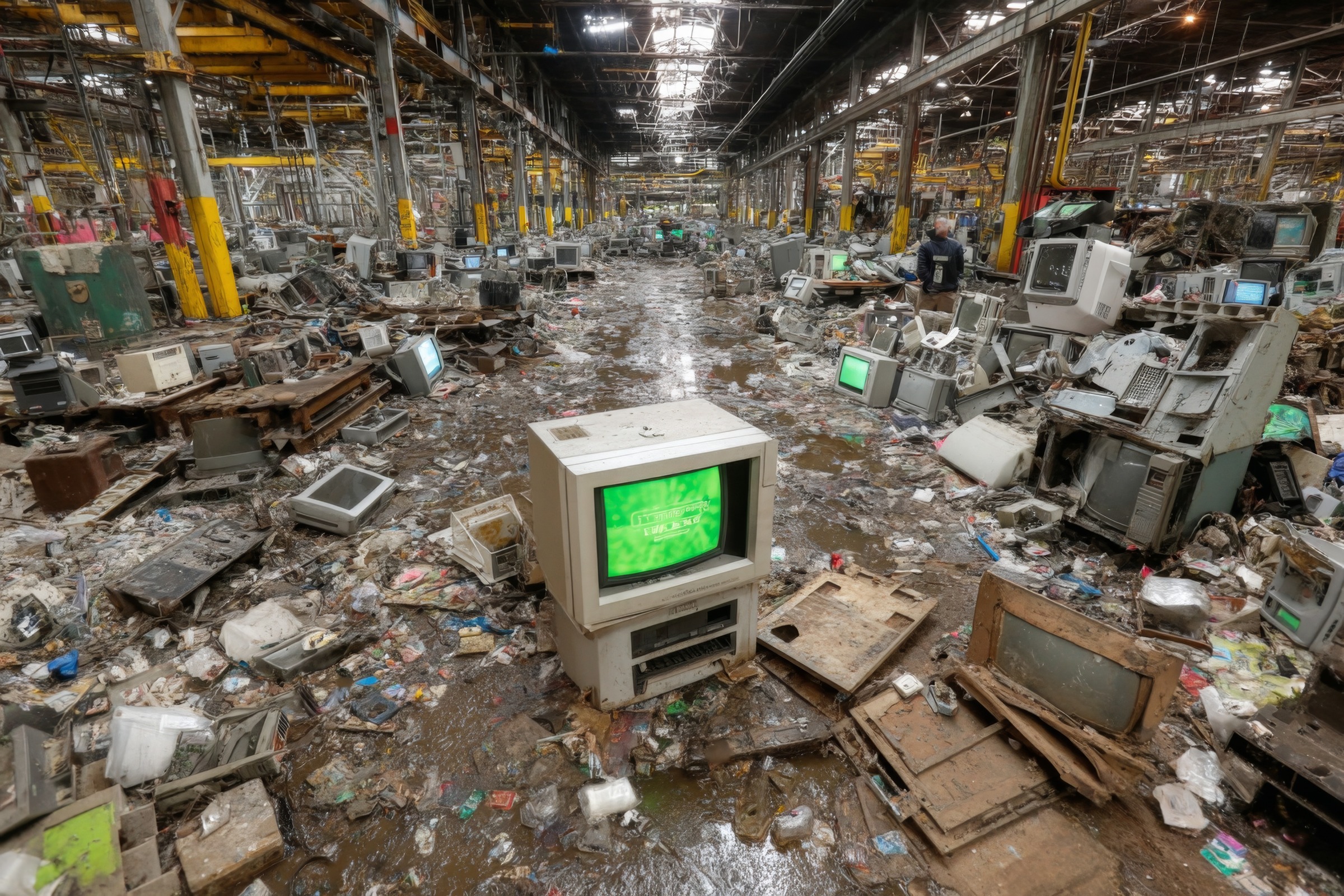
We’ve experienced this pattern repeat across dozens of transformation projects. And we’ve either been called to come in to save or ultimately transfer those systems into the boneyard. On the flip side, we’ve also seen what changes when a team actually gets aligned, well before equipment orders ship.
Why Transformation Projects Lose Control
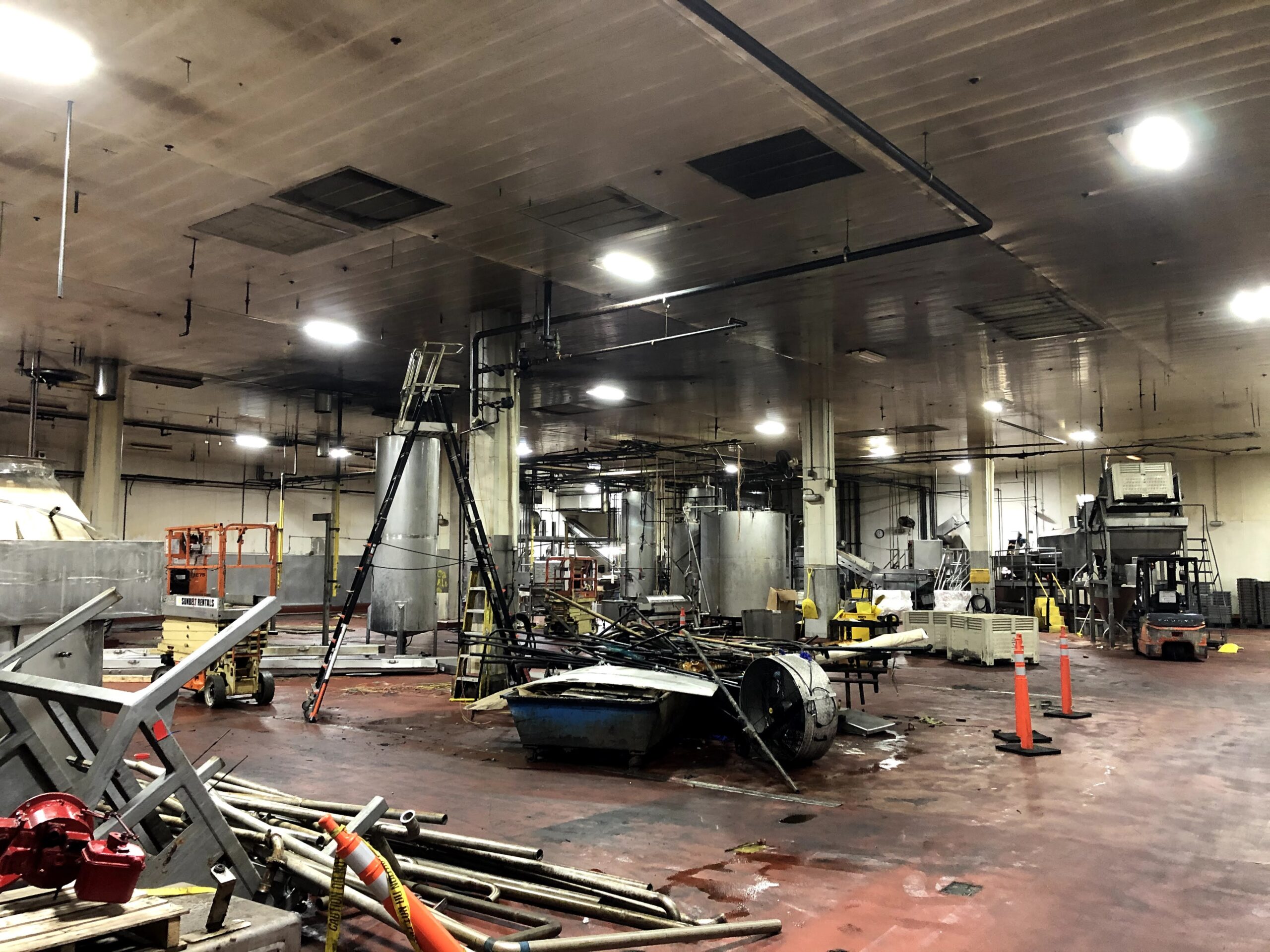
Transforming a facility – whether it’s a brownfield, a legacy, or a constrained greenfield site – isn’t like a capital project where you simply replace one thing with a newer version of the same thing. It’s architectural rethinking and sometimes in the literal sense of the word. You’re changing how material flows, how decisions get made, how quality gets assured, how data gets captured. It’s manufacturing, elevated. Redefined, even. There is a lot of money flowing to fund ideas and making mistakes could get costly fast.
These nuanced complexities create a perspective problem as well. A manufacturing director sees automation potential. A plant manager sees operational disruption. Finance sees an 18-month cash flow impact. Procurement sees a 16-week equipment lead time. Quality sees new validation requirements. Everyone is looking at the project from their lens, so how does it all come together? If team perspectives don’t get integrated into a coherent plan, you end up with decisions that make sense in isolation but conflict in execution.
The projects that succeed are the ones that get these perspectives on the table early, resolve the gaps, and build a plan that acknowledges all the needs, wants, and constraints simultaneously.
What Actually Takes Time (And Why It Matters)
Often, as leaders we lose sight of risk when there is pressure to deliver. When companies ask us about transformation timelines, we usually hear the same thing: “Can we do this faster?”
The honest answer is no – not without creating bigger problems later. But the reason isn’t what most people think.
The real constraint isn’t equipment installation or construction. These timelines are relatively straightforward. The constraint is decision-making, alignment, and design rigor. Specifically: understanding what you’re actually transforming, designing it properly, validating your assumptions before you’re locked into them, and making sure everything that worked in your old process will work when designing the new one.
That last point is worth emphasizing because it catches most teams by surprise. You’re moving from a semi-manual process that handled raw materials one way to an automated process that handles them differently. Packaging, dimensions, material properties – what worked before might not feed reliably into new equipment. You discover this in design, not in week 18 when everything is installed and a critical component doesn’t work with your material specs.
This is where 3D mapping and digital twin development earn their time investment. You’re not simply creating a progressive, real-world, advanced model to show off to your friends at work. You’re creating a testing ground where you can ask “what if” questions before they become cripplingly expensive problems. Then we start asking the right questions about the flow of people, process, and material. We begin to preemptively understand material delivery schedule influences on production schedules. We can start to simulate production scale challenges and anticipate capital investment shortfalls before a single PO is placed. You test these scenarios in the model, you learn what works and what doesn’t, and then you design based on actual understanding instead of assumptions.
The Hidden Cost of Compression
We did some broader market analysis on projects we found that were said to be compressed by roughly 30-40% on timeline and compared them to those transformation projects that were either delivered on-time or over time by 20-30%. The pattern is consistent.
Compressed timelines create a false economy. While it may be impressive to your corporate stakeholders, your shareholders may see the outcome differently. You save 6 months of planning, but then you lose 8 to 12 months due to problems that emerge during ramp up and execution. Equipment arrives and doesn’t integrate as designed. Control systems need rework. Raw material or component compatibility becomes a crisis. Operators aren’t trained or confident in parallel operation, which means more time is spent doing the work that should have already been done. This is the culture we have all come to bear – the culture of reactivity.
Projects with realistic timelines show a different pattern. More upfront time, yes. But dramatically fewer downstream surprises. When there is a sound investment in understanding the scope, design, assumptions, and testing before full production, the integration phase is smoother and the validation phase is quicker. The capital investment rate return higher and faster – on average – and the agility unlocked creates opportunities for more projects to happen.
The data isn’t surprising when you think about it. According to manufacturing industry studies, projects that invest 35 to 40 percent of total timeline in planning and design phase typically deliver on schedule and budget. Projects that compress planning to 15 to 20 percent of timeline have a 70 percent chance of schedule overrun and 60 percent chance of budget overrun.
We’ve seen companies lose 4 to 6 months to problem-solving that could have been prevented with better upfront design. That’s not efficient from a timeline, people, process, or stress perspective. It’s a timeline catastrophe masquerading as progress. This is another reason why companies don’t trust consultants or solutions providers anymore.
The Real Magic Happens in the Early Stages
Let’s go back to a point I had previously emphasized. Like Alexander Hamilton – we all want to be in the room where it happens. But what happens when there isn’t alignment and congruency throughout the change management process? If you’ve been reading this far, I think the answer is a bit obvious. But what isn’t obvious to companies that haven’t lived this truth – is when true alignment actually happens, how do we properly leverage the momentum?
Teams finding alignment doesn’t happen naturally. And even if the illusion of alignment is present, there may be underlying rifts that will drive future conflict. We’ve all been in a room where we pretended to agree with our leadership, while behind closed doors going to our most trusted peers and venting the complete opposite. We work so hard to become decision makers and then when the moment presents itself – we fake conformity. And this can happen for many reasons. As I stated before, the most challenging element to transformation is bringing synergy to a group of people that – throughout their entire career – have been condition to challenge each other for the benefit of the consumer. I wouldn’t call it adversarial in nature, but it could prove to be difficult to bring different personalities and backgrounds together to align on priorities and concede points to one another. But, this is the important part of having an experienced practitioner guide the narrative and craft solutions to support the vision, ensuring everyone’s input is acknowledged and validated. Inclusion is key to creating positive transformational uptake.
“Well, what about the rest of the project?”, you might ask me. The engineering design and compliance documents re critically important, but again, those are the outcomes of the work done upfront to ensure we aren’t getting caught up in revision purgatory. We’ve been there. It’s not fun. We thrive in helping operations navigate uncertainty. While I tell my team all the time that we’re not certified therapists, it helps that we have a shared history and can quickly learn to navigate tricky office politics, or help to articulate critical path requirements in a cross-functional manner. In helping each department see the business outcome they’re designing toward, there develops a synergy and unification behind transformation efforts that keeps sights set on crafting solutions for a better future.
The only thing element that must exist between all parties is trust. Trust that those trying to help – truly have the background and expertise to do so. And if they don’t, look elsewhere. I think that would be easy enough to spot.
We’ve developed operational readiness assessments specifically to help companies unlock early-stage efficiency. Tools that help teams understand where they actually stand before any heavy lifting begins. What’s the maturity of your current operation? Where are the dependencies? Which decisions need to happen first? What’s the risk profile if certain pieces aren’t validated before you move forward? Have you even considered a budget for this effort?
An operational readiness assessment isn’t a document that sits on a shelf. It’s a conversation starter. It forces the team to articulate assumptions, surface disagreements, and build shared understanding.
Teams that do this work early – even if it feels like it’s slowing down the timeline – end up moving faster overall because decisions are clearer, a full picture is painted, ownership behind the vision is broadened, and misalignment doesn’t sabotage momentum.
What a Comprehensive Approach Looks Like
When transformation works several components come together to make it happen.
My philosophy has always been that it starts with a strategic assessment. Often times we see clients jump to conclusions and try to solve problems or rush toward solutions. It shouldn’t be “let’s build an automated factory.” Rather, “what are we actually trying to achieve?” Is it capacity expansion? Quality improvement? Product variations causing complexity issues? Cost reduction? The answer shapes everything downstream. A timeline and design built for flexibility looks different than one built purely for theoretical throughput.
Once you understand the goal, we work backwards to determine site and operational understanding. What are the constraints? What are the physical constraints of the space? What’s working in your current operation that you want to preserve, and what are the processes that are creating bottlenecks? A lot of what we do involves a Level of Detail (LOD) 3 or 4 BIM design of the space with a complete 3D mapping of the physical facility. Alongside process mapping of operational current state this forms a complete picture; the digital twin foundation comes from understanding both.
Then we move into the design phase, but real design. Not templated solutions. Nothing like “here’s what we did for the last client.” Rather, a design built from foundational process principles and our previous work product: given your space, materials, process, constraints, goals, rough budget, and timeline – what configuration optimizes for your specific situation?
During design, it’s time to demonstrate modeling alternatives using digital twin technology. This is a time where testing your assumptions about material flow, throughput, changeover time, and flexibility all converge. You identify where you’ll need to change raw material sourcing or component specifications. You validate that your automation assumptions actually work with your material properties.
And the most important and often overlooked element is team engagement, training, and preparation. And it isn’t necessarily exclusively training on the equipment – that can come later. Rather, conversations about what’s changing, why it’s changing, what’s expected, what the transition will look like. Change management and dialogue establishment. And you might think that the approach might sound soft, but it’s foundational to execution success. Teams that understand the “why” and feel heard on the challenges execute more effectively. It also provides teams with insights on the design that may impact adoption and overall functionality. What a concept.
By the time equipment procurement happens, the design is solid enough that you’re not ordering based on sketches. That matters enormously. It means when equipment arrives, it fits. It integrates. It works with the control architecture designed around it. It captures the processes defined, spatial constraints identified, and works to empower, not replace.
Then comes the Factory and Site Acceptance Testing, User Acceptance Testing, installation and commissioning. This segment can be accompanied by parallel operations of relocated equipment (running old and new systems simultaneously to maintain continuity as space allows). This is where the initial problems are identified and controlled, in a contained environment and not in full production. And then validation – proving the system actually delivers the performance you planned for.
The Bridge Between Strategy and Execution
This is where the biggest wins come in and also where many transformation projects get stuck. They have a good vision at the top. They have good execution at the ground level. But the bridge between them is missing. The strategic intention doesn’t translate into design decisions. Or the design decisions don’t translate into operational readiness.
That’s the gap we’ve learned to fill. It requires tools and processes specifically designed to translate across functions and ensure alignment prior to locking in a design, location, hardware, equipment, etc,.
We’ve seen (and worked for) companies that invest in expensive assessments early – understanding their readiness, mapping their operations, identifying where they need support – and discover that investment saves them months later because the team moves in sync instead of against each other. It helps when there are seasoned change management champions supporting the initiatives. Pushing from the outside-in doesn’t always produce the best results.
For many, it seems counterintuitive: more upfront assessment work, more cost, more time spent not making progress toward final outcomes. But these steps yield clearer thinking, tighter cross-functional alignment, and faster overall progress.
You May be Thinking, “This Doesn’t Apply to Me“
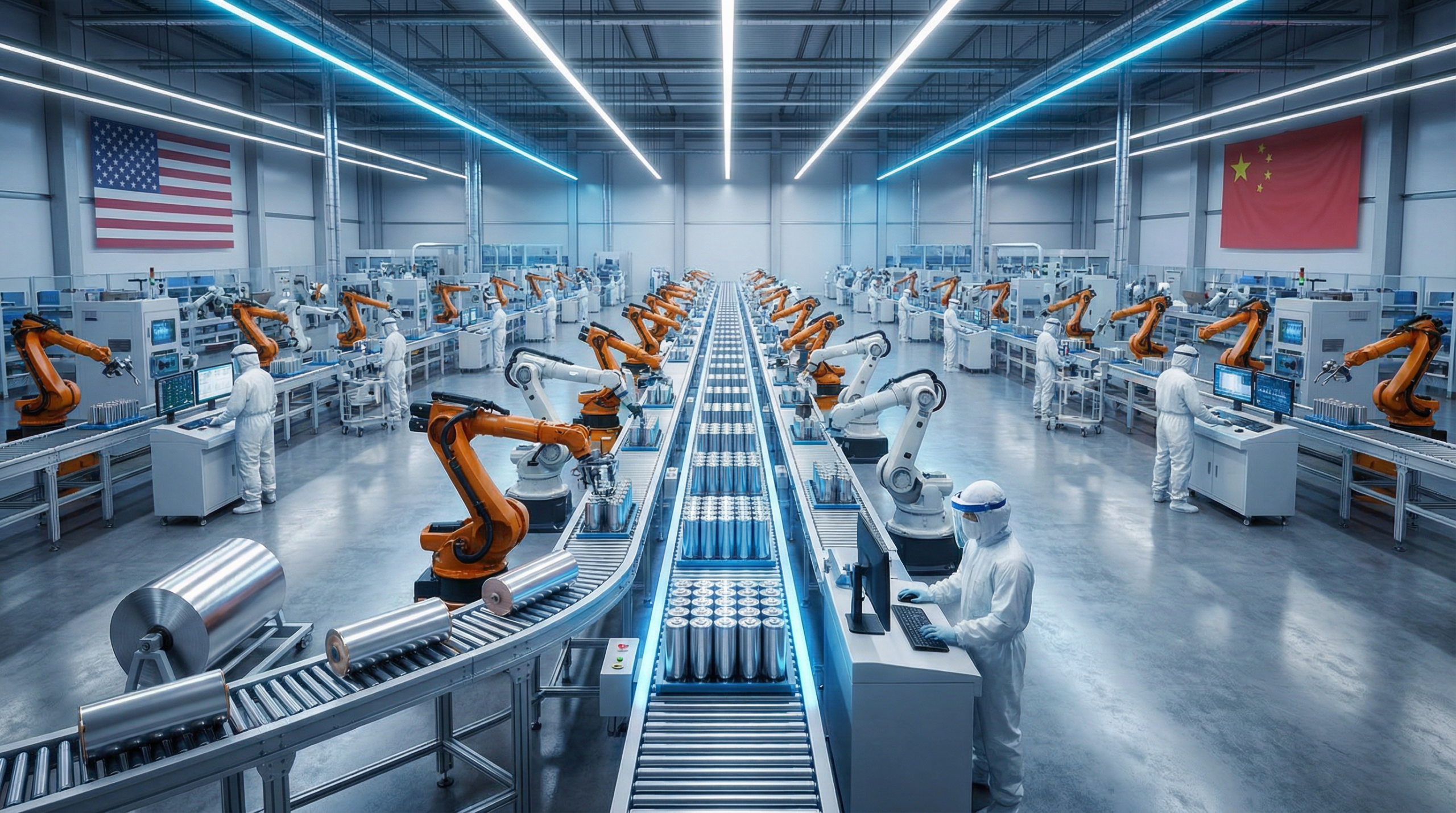
The timeline and approach we’re describing isn’t specific to brownfield sites. It applies to any significant operational transformation – whether you’re expanding for capacity, modernizing a legacy facility, or expanding a greenfield that was poorly designed.
The principles are the same: understand your reality, design thoughtfully, validate assumptions before you’re committed, get your team aligned. Getting buy-in isn’t just about avoiding sabotage or derailment – it’s about creating ownership and a sense of culture that will drive future operational efficiency in a way that cannot be measured by sensors or Industry 4.0 technology.
All of transformations benefit from treating the collaborative planning and design phases as serious, substantive work – not as overhead to be minimized.
The Opportunity Most Teams Miss
Cost is often a prohibitive factor when discussing future technologies and operational unlocks. But here’s what we see when teams that invest in proper planning and design end up implementing digital twin technology. These models don’t just support the initial transformation, they become operational tools. Companies use these models to test new product variants before commissioning. Measure change management when modifying processes or boosting throughputs. They use it to model capacity expansion and new technology deployments like AMRs or AGVs in hybrid environments.
That’s ongoing value that compounds for years – but of course it comes at a cost of development, maintenance, and support. It boils down to how the opportunity and ROI is positioned. But at the end of the day, you don’t build these models if you compress the planning phase. You only get it if you invest in understanding the system comprehensively from the beginning.
We also see client change management unlocks become easier to achieve over time. They’re not surprising people during execution. They’ve been transparent about what’s changing, how, and why. They’ve developed and invested in change agents who are genuinely invested in success because they’ve been part of the thinking.
These outcomes sound soft – tools, alignment, confidence. But they translate directly to timelines that hold, budgets that don’t explode, and systems that deliver their promised outcomes.
So What Can I Do?
If you’re sitting with a transformation project that feels unclear – either because you’re not sure you have the right approach, because you suspect timelines are being underestimated, or you suspect ROI is being inflated – that’s the signal to step back and do some foundational work before you’re committed. Take the time and put in the initial effort. Pull people into the workstream to help support and broaden your perspectives.
An operational readiness assessment can clarify where your team actually stands. What’s aligned and what’s conflicting? What needs to happen first? What risks are you carrying? What assumptions are you making that might not hold? These are good starting points to cover off.
A strategic assessment can answer the more difficult questions: are you actually optimizing for the right outcome? Sometimes teams discover that their initial instinct – “we need to automate everything” – isn’t actually the right answer. Especially when they don’t know how and speak in broad, sweeping terms, juggling buzzy acronyms and jargon adopted from LinkedIn influencers. Maybe your team needs flexibility more than throughput. Maybe they need to maintain certain manual processes for quality reasons. Maybe the transformation they need is different than the one they thought they needed. Maybe it’s not needed at all and a simple process change is identified.
Those discoveries sound like delays or disappointments. They’re actually the opposite. They’re preventing you from investing in the wrong solution.
The teams that reach out to us with transformation challenges don’t always know they need readiness assessments or operational mapping. Most don’t even know what those are. But normally what we see is a client coming to us with a problem needing support that they’ve already done the work on. We always say, “well, if you’ve done the work, why do you need our help?” By the time we’re in a real conversation and simply uncovering the work that they actually did do, they understand that the clarity about what they’re actually trying to accomplish and where they need to make changes is worth the investment. Process is everything. It makes everything else possible.
If you’re thinking about a significant transformation, we can help you connect what you’re actually trying to accomplish and what an approach that works would look like. Not with a one-size-fits-all proposal. But with a “listen-first”, honest conversation about your specific situation, your constraints, your goals, and what it would take to succeed.
When we start with conversation, clarity comes quickly.